
Getting concrete exactly where it needs to go sounds straightforward. On complex sites it rarely is. Difficult access, height requirements, distance from the mixing point, and tight placement windows all create challenges that traditional concrete placement methods handle poorly. Pumping solves these problems simultaneously. It delivers concrete precisely where it is needed regardless of what stands between the mixing point and the placement location.
Precision Placement Changes What Is Possible on Any Site
Concrete that cannot reach its placement location efficiently creates delays that compound quickly. Contractors and developers who refuse to let access constraints slow their projects connect with professional Concrete Pump Nottingham specialists whose equipment and operational expertise deliver concrete precisely where every pour requires it regardless of site complexity.
Pumping Dramatically Reduces Labor Requirements
To begin with, traditional concrete placement using wheelbarrows, buckets, and manual labor requires significant workforce allocation that pumping equipment replaces with a fraction of the personnel. A pump that delivers concrete directly to the placement location eliminates the labor chain between the mixer and the pour. Fewer workers handling concrete means fewer fatigue-related errors. It means faster placement that keeps concrete within optimal workability windows. It means reduced labor costs that improve project economics on every pour the pump services. These efficiency gains accumulate across a project timeline into meaningful cost and schedule advantages that manual placement methods cannot approach.
Boom Pumps Access Locations That Ground Equipment Cannot Reach
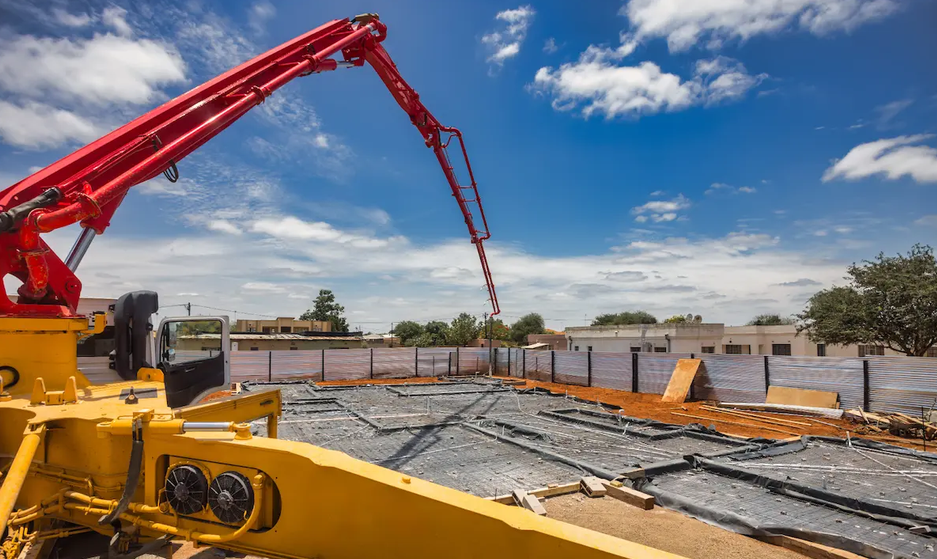
Furthermore, boom pump technology extends concrete placement capability to elevated locations, confined spaces, and areas separated from vehicle access by distances or obstacles that render ground-based placement impractical. Multi-story construction, bridge deck pours, elevated slab work, and basement pours in confined excavations all benefit from boom pump reach that places concrete accurately without the structural loading and access disruption that alternative approaches create. A pump operator with genuine experience reads each site’s access challenges accurately. They position equipment to maximize reach while maintaining the stability and safety standards that concrete pumping operations demand.
Continuous Placement Improves Pour Quality Significantly
Another quality advantage that pumped concrete delivery provides over batch placement methods is the continuous flow that eliminates the cold joints and placement inconsistencies that interrupted pours create. Concrete placed continuously within its workability window achieves better consolidation, more uniform strength development, and fewer surface defects than the same mix placed in interrupted batches whose leading edges begin setting before subsequent material arrives. For structural pours where strength and integrity are primary quality objectives, continuous pumped placement consistently produces superior outcomes that justify the equipment investment well beyond the labor savings alone.
Equipment Selection Should Match the Specific Pour Requirements
Finally, matching pump equipment type and capacity to the specific requirements of each pour produces better outcomes than applying whatever equipment is available regardless of fit. Line pumps serve ground-level and low-rise applications efficiently. Boom pumps address height and distance challenges that line pumps cannot reach. Volumetric mixers combined with pump equipment serve remote locations where ready-mix delivery is impractical. An experienced concrete pumping company assesses each project’s specific requirements and recommends equipment whose capabilities genuinely match what the pour demands rather than defaulting to a single solution applied universally across very different project types.
Conclusion: Precision Placement Changes What Is Possible on Any Site
To sum it all up, concrete pumping reduces labor requirements, extends placement reach to locations ground equipment cannot access, improves pour quality through continuous placement, and requires equipment selection matched to specific project demands. Every pour that benefits from pumping produces better results faster and more economically than manual placement methods allow. Choose a pumping partner whose equipment capability and operational experience match what the project actually requires.
Recent Comments